

I Wanna Iguana Book PDF: A Comprehensive Guide (Updated 12/16/2025)
Today, December 16, 2025, finding a legitimate “I Wanna Iguana” PDF requires caution, as numerous unofficial sites pose security risks.
Karen Kaufman Orloff’s charming children’s book, “I Wanna Iguana,” has captivated young readers since its release, becoming a staple in classrooms and home libraries. The story’s relatable narrative – a child’s persistent plea to a parent for a pet iguana – resonates with children’s desires and the artful negotiation with parental figures.
This widespread appeal naturally fuels a demand for accessible formats, including a PDF version of “I Wanna Iguana.” Parents and educators seek convenient digital copies for reading aloud, classroom activities, or simply for on-the-go access; However, the popularity also attracts unauthorized digital distributions, making it crucial to locate legitimate sources for a safe and quality reading experience. The book’s enduring charm ensures continued interest in obtaining a readily available PDF.
Understanding the Demand for a PDF Version
The desire for a “I Wanna Iguana” PDF stems from several practical advantages offered by digital formats; eBooks provide portability, allowing access on various devices – tablets, smartphones, and computers – without the need to carry a physical book. This is particularly beneficial for educators who may wish to display the story during lessons or for parents traveling with children.
Furthermore, PDF versions often facilitate features like text magnification, aiding readers with visual impairments. The convenience and cost-effectiveness of digital books also contribute to their popularity. However, it’s vital to prioritize obtaining the PDF from official, secure sources to avoid potential malware or copyright infringement issues, ensuring a safe and legal reading experience.

About the Book & Author
“I Wanna Iguana”, penned by Karen Kaufman Orloff, is a beloved children’s story celebrated for its engaging narrative and vibrant illustrations, captivating young readers.
Overview of “I Wanna Iguana” by Karen Kaufman Orloff
“I Wanna Iguana”, a delightful children’s book by Karen Kaufman Orloff, centers around a young boy’s persistent attempts to convince his mother to let him have an iguana as a pet. The story unfolds through a series of increasingly elaborate and humorous arguments presented by the boy, showcasing his creativity and determination.
Orloff masterfully portrays the classic childhood negotiation, highlighting the boy’s persuasive tactics and the mother’s steadfast, yet understanding, responses. The narrative cleverly explores themes of responsibility, compromise, and the art of persuasion, all while maintaining a lighthearted and engaging tone. It’s a relatable story for both children and parents, sparking conversations about wants versus needs and the importance of thoughtful decision-making. The book’s enduring popularity stems from its ability to resonate with universal experiences of childhood desire and parental guidance.
Karen Kaufman Orloff’s Writing Style and Target Audience
Karen Kaufman Orloff employs a dynamic and engaging writing style characterized by playful dialogue and a keen understanding of childhood perspectives. Her work excels at capturing the voice of a child, making the narrative feel authentic and relatable. The use of repetition, particularly the boy’s insistent “I wanna iguana!” refrain, adds to the book’s comedic effect and reinforces the central theme.
The target audience for “I Wanna Iguana” is primarily children aged 4-8. However, the book’s humor and relatable themes also appeal to parents and educators. Orloff’s writing encourages interactive reading, prompting discussions about negotiation, responsibility, and the power of persuasion. Her ability to blend entertainment with subtle educational elements makes her books valuable resources for both home and classroom settings.
Illustrations and Their Impact on the Story
The illustrations in “I Wanna Iguana” are integral to the storytelling, perfectly complementing Karen Kaufman Orloff’s text. They are vibrant, expressive, and full of playful detail, enhancing the comedic timing and emotional impact of the narrative. The artwork effectively portrays the boy’s escalating desperation and the mother’s increasingly exasperated reactions.
The visual depiction of the iguana itself is particularly noteworthy, showcasing its unique physical characteristics in a charming and non-threatening way. The illustrations contribute significantly to the book’s overall appeal, making it visually engaging for young readers. They help to bring the story to life, fostering a deeper connection between the audience and the characters, ultimately enriching the reading experience.

Iguana Facts Within the Book
“I Wanna Iguana” subtly introduces iguana characteristics – their size, scaly skin, and herbivorous diet – while focusing on a child’s desire for a pet.
Iguana Species Mentioned or Implied
While “I Wanna Iguana” doesn’t explicitly detail specific iguana species, the book centers around the desire for a green iguana, the most commonly recognized variety. The narrative implies familiarity with this species due to its prevalence as a pet.
The text doesn’t delve into the endangered Fiji banded iguana or the desert iguana native to San Diego County, focusing instead on the general concept of iguana ownership. Though not named, the book’s depiction aligns with the physical traits of green iguanas – their bulky appearance and potential for significant size.
The story’s simplicity prioritizes the child’s persuasive arguments over detailed biological classifications, making the specific species less crucial than the overall idea of having an iguana.
Physical Characteristics of Iguanas (as depicted)
“I Wanna Iguana” portrays iguanas as substantial lizards, hinting at their potential for considerable size, characteristic of the species. The illustrations likely showcase their stout build and scaly skin, often described as covered in wart-like textures and spines along the back.
Though not explicitly detailed, the book’s imagery likely includes the distinctive dorsal crest, a defining feature of many iguana species. The presence of a dewlap – the flap of flesh under the neck – is probable, though its function isn’t explained.
The book focuses on the overall impression of an iguana as a unique reptile, rather than a precise anatomical breakdown, emphasizing its visual appeal to a young audience.
Iguana Diet and Habitat (as presented in the book)
While “I Wanna Iguana” centers on the desire for a pet, it subtly implies iguana needs. The narrative doesn’t delve into detailed dietary specifics, but the context suggests a need for space and appropriate sustenance. Iguanas are generally herbivorous, a detail potentially inferred through illustrations of leafy greens.
The book doesn’t explicitly define the iguana’s natural habitat, but the story’s setting hints at a warm climate suitable for these tropical reptiles. The illustrations likely depict a lush environment, reflecting their origins in the Americas.
The focus remains on the child’s perspective, rather than a comprehensive ecological lesson, but the book subtly introduces the idea that iguanas require specific living conditions.
Iguana Behavior and Temperament (as portrayed)
Within “I Wanna Iguana,” the iguana’s personality is largely shaped by the child’s imagination and persuasive arguments. The book doesn’t present a scientifically accurate portrayal of iguana behavior, but rather focuses on the potential for companionship. The iguana is depicted as a desirable pet, responding to the child’s appeals, though realistically, iguanas exhibit territorial tendencies.
The narrative emphasizes the iguana’s potential for interaction and entertainment, overlooking the complexities of their actual temperament. While the story doesn’t showcase aggression, real iguanas can be defensive.
The book’s charm lies in its anthropomorphism, attributing human-like qualities to the reptile, creating a heartwarming, if somewhat unrealistic, depiction.

Finding a Legitimate “I Wanna Iguana” PDF
Official eBook sources are the safest way to acquire a “I Wanna Iguana” PDF, avoiding risks associated with unofficial websites and potential malware.
Official Sources for Purchasing the eBook
Securing a legitimate copy of the “I Wanna Iguana” eBook is paramount, and several official sources offer reliable access. Major online booksellers, such as Amazon Kindle Store, Barnes & Noble Nook, and Apple Books, consistently stock digital versions of popular children’s literature, including Karen Kaufman Orloff’s beloved story.
These platforms employ robust security measures, ensuring a safe download experience and protecting your personal information. Additionally, directly visiting the publisher’s website – often Houghton Mifflin Harcourt – can provide access to the eBook, potentially with exclusive offers or bundled content. Purchasing through these official channels guarantees you receive a high-quality, legally obtained PDF, supporting the author and publisher while avoiding the pitfalls of unauthorized downloads.
Risks Associated with Downloading from Unofficial Websites
Downloading the “I Wanna Iguana” PDF from unofficial websites presents significant risks. These sites frequently harbor malware, viruses, and spyware, potentially compromising your device and personal data. Often, these PDFs are low-quality scans with formatting errors, diminishing the reading experience.
Furthermore, obtaining content from unauthorized sources constitutes copyright infringement, supporting illegal activities and undermining the author’s rights. Such websites often employ deceptive tactics, like misleading download buttons and intrusive advertisements. Prioritizing legitimate sources, like Amazon or the publisher’s site, safeguards your digital security and ensures a quality reading experience, avoiding the potential for financial loss or identity theft associated with risky downloads.
Identifying Safe and Reliable PDF Download Sites
Securing a legitimate “I Wanna Iguana” PDF necessitates careful source selection. Prioritize official eBook retailers like Amazon Kindle Store, Google Play Books, or directly from the publisher’s website. These platforms employ robust security measures, guaranteeing a safe download experience and copyright compliance.
Look for websites with “https” in the URL, indicating a secure connection. Check for clear copyright information and privacy policies. Avoid sites offering “free” PDFs, as these are often illegal and riddled with malware. Reputable platforms will clearly state the purchase price and offer customer support. Always scan downloaded files with updated antivirus software as a precautionary measure, ensuring a secure and enjoyable reading experience.
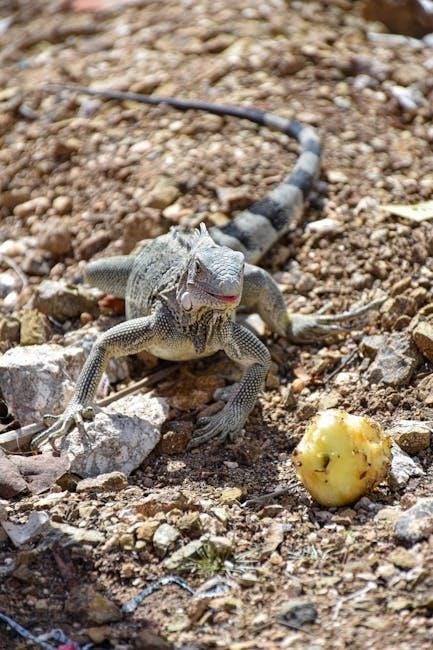
Foxit PDF Reader: A Tool for Viewing the PDF
Foxit PDF Reader provides a free, fast, and secure method to view, annotate, and manage your “I Wanna Iguana” PDF document effectively.
Foxit PDF Reader emerges as a powerful and versatile solution for accessing and interacting with digital documents, including the “I Wanna Iguana” eBook. Designed with user experience in mind, it offers a compelling alternative to other PDF viewers, catering to both individual users and large organizations. This software distinguishes itself through its speed, security, and comprehensive feature set.
It’s not merely a viewer; Foxit allows for annotation, form filling, and digital signatures, enhancing document workflow. The reader’s commitment to security is evident through continuous updates and robust protection against vulnerabilities. Its intuitive interface ensures ease of navigation, making it accessible to users of all technical skill levels. Foxit’s dedication to performance ensures a smooth and responsive experience, even with large or complex PDF files like illustrated children’s books.

Foxit PDF Reader Features: Viewing and Annotation
Foxit PDF Reader excels in both viewing and annotating digital documents, making it ideal for engaging with the “I Wanna Iguana” PDF. Beyond simple page turning, it supports various viewing modes – single page, continuous, and thumbnail views – for customized reading. Annotation tools are robust, allowing users to highlight key passages, add sticky notes, and draw directly onto the pages.
These features are particularly useful for educational purposes, enabling interactive reading experiences. The software also supports text selection, copy-pasting, and searching within the document. Furthermore, Foxit allows for adding comments and replies, facilitating collaborative reading and discussion. These functionalities transform the PDF from a static document into a dynamic learning tool, enhancing comprehension of the story and its accompanying information.
Foxit PDF Reader: Security Features and Updates (April 23, 2025)
As of April 23, 2025, Foxit PDF Reader prioritizes user security while providing a powerful platform for accessing the “I Wanna Iguana” PDF. Regular updates address vulnerabilities and enhance protection against malicious software. Integrated security features include password protection for PDFs, digital signatures for verifying document authenticity, and redaction tools to remove sensitive information.
Foxit actively combats potential threats, ensuring a safe reading experience. The software’s commitment to performance improvements also contributes to security by minimizing system instability. Users are prompted to install updates, maintaining a robust defense against evolving cyber risks. This dedication to security is crucial when downloading and viewing PDFs from various sources, safeguarding your device and data.
Troubleshooting Common Foxit PDF Reader Issues
When accessing the “I Wanna Iguana” PDF, users might encounter issues with Foxit PDF Reader. Common problems include slow loading times, display errors, or annotation malfunctions. First, ensure your Foxit Reader is updated to the latest version for optimal performance and bug fixes. Clearing the cache can resolve display issues, while restarting the application often fixes temporary glitches.
If the PDF itself is corrupted, try downloading it again from a trusted source. Compatibility issues can arise; ensure the PDF meets Foxit’s supported standards. For persistent problems, consult Foxit’s online help resources or community forums for specific troubleshooting steps and solutions. Regularly scanning your system for malware is also recommended.

Iguana Biology & General Information
Iguanas are cold-blooded, egg-laying reptiles adapting to land and water, exhibiting unique behaviors. Understanding their biology enhances appreciation for the “I Wanna Iguana” story.
Iguana Adaptations to Land and Water
Iguanas demonstrate remarkable adaptability, thriving in diverse environments, a theme subtly present within “I Wanna Iguana.” Their physiology supports both terrestrial and aquatic lifestyles. Strong limbs and claws facilitate climbing and navigating land, while laterally flattened tails aid in swimming.
These reptiles can efficiently regulate their body temperature through basking and seeking shade, crucial for cold-blooded creatures. Salt glands near the nostrils allow them to excrete excess salt ingested from their diet or seawater, a vital adaptation for coastal species. This biological flexibility, mirroring the child’s desire in the book, highlights nature’s ingenuity. Understanding these adaptations enriches the reading experience and fosters appreciation for these fascinating reptiles.
Iguana Cold-Blooded Nature and its Implications
As cold-blooded (ectothermic) animals, iguanas rely on external sources to regulate their body temperature, a concept indirectly relatable to the child’s need for parental approval in “I Wanna Iguana.” Their metabolic rate fluctuates with the environment, impacting activity levels. This means iguanas become sluggish in cooler temperatures and require basking in the sun to become active.
This dependence influences their behavior, diet, and geographic distribution. It also explains why they are more commonly found in warmer climates. Understanding this aspect of iguana biology provides context for their observed behaviors and highlights the delicate balance of their ecosystem. This biological reality adds depth to appreciating the creature featured in the book.
Iguana Reproduction and Egg-Laying
Iguanas are egg-laying reptiles, a fascinating aspect of their life cycle that, while not explicitly detailed in “I Wanna Iguana,” contributes to understanding their existence. Female iguanas carefully select nesting sites, often digging burrows in soil or utilizing tree hollows. They lay a clutch of several eggs, the number varying by species and the female’s age.
Incubation periods depend on temperature, typically lasting around 90-120 days. The hatchlings emerge fully formed, miniature versions of their parents, and immediately begin their independent lives. This reproductive strategy highlights the vulnerability of young iguanas and the importance of habitat preservation.
Endangered Iguana Species (Fiji Banded Iguana Example)
While “I Wanna Iguana” focuses on the desire for a pet, it’s crucial to acknowledge the precarious status of many iguana species in the wild. The Fiji Banded Iguana serves as a stark example, facing critical endangerment due to habitat loss and predation. Once widespread, their population dwindled drastically, prompting intensive conservation efforts.

These efforts include captive breeding programs and habitat restoration. Understanding the threats faced by species like the Fiji Banded Iguana fosters a greater appreciation for reptile conservation. Supporting responsible pet ownership and advocating for habitat protection are vital steps in ensuring the survival of these remarkable creatures.
Green Iguanas: The Most Common Species
Green Iguanas, originating from Brazil to Mexico, are frequently introduced to new environments like Florida, Hawaii, and Texas, impacting local ecosystems.
Origin and Distribution of Green Iguanas
Green Iguanas, scientifically known as Iguana iguana, boast a native range stretching from southern Brazil, traversing through Paraguay, and extending northward through Central America all the way to Mexico. This widespread distribution reflects their adaptability to diverse tropical habitats. However, their story doesn’t end there.
Through both intentional releases and accidental escapes from the pet trade, Green Iguanas have established feral populations in several non-native locations. Most notably, thriving communities now exist in Florida, Hawaii, and Texas within the United States. These introduced populations present ecological challenges, potentially impacting native flora and fauna. Understanding their origins and current distribution is crucial for managing their presence and mitigating any adverse effects on established ecosystems. Careful consideration is needed when seeking a “I Wanna Iguana” PDF to understand these impacts.
Green Iguana Appearance and Color Variations
Green Iguanas are visually striking reptiles, characterized by their robust build and scaly skin often covered in wart-like projections and dorsal spines. While commonly referred to as “green,” their coloration is surprisingly variable. Juvenile iguanas typically exhibit a vibrant, bright green hue, providing excellent camouflage amongst foliage.
However, as they mature, their color can shift dramatically, ranging from shades of green and brown to orange, reddish, or even grayish tones. Males, particularly during breeding season, often display more intense and vibrant colors to attract mates. This color change is influenced by factors like age, health, and environmental conditions. A detailed “I Wanna Iguana” PDF should illustrate these fascinating color variations, aiding in identification and understanding their life cycle.
Green Iguanas, originally native to Central and South America, have established thriving populations in non-native environments like Florida, Hawaii, and Texas. These introductions, often stemming from the pet trade, have resulted in significant ecological impacts. A comprehensive “I Wanna Iguana” PDF should address this phenomenon, detailing how these adaptable reptiles have successfully colonized these new regions.
Their ability to thrive is linked to their herbivorous diet and tolerance for diverse habitats. However, their presence can displace native species and cause damage to vegetation. Understanding the challenges and consequences of these introductions is crucial, and a well-researched PDF resource can provide valuable insights into this complex ecological issue.
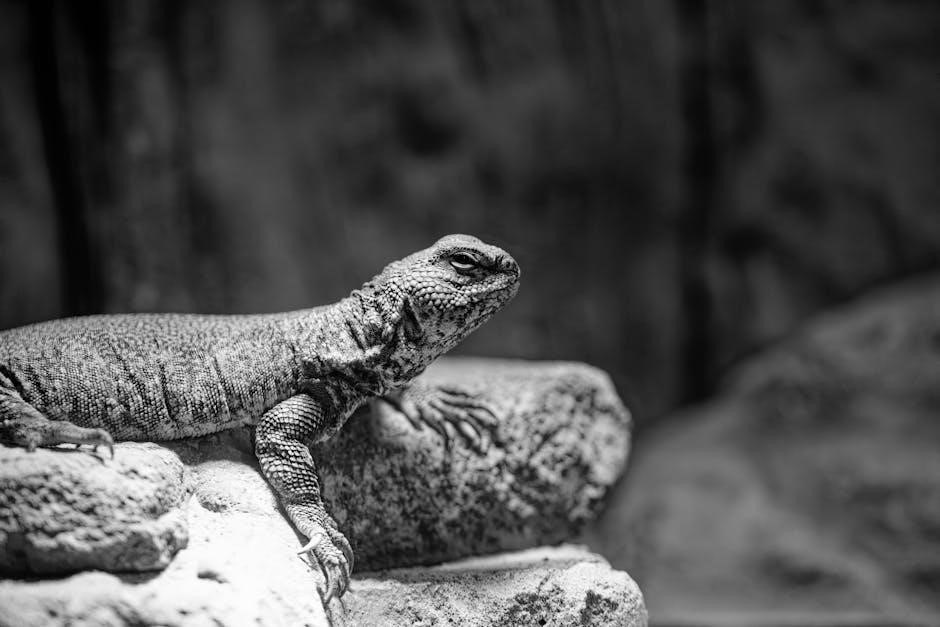
Iguana Characteristics: A Detailed Look
Iguanas possess distinctive features: dorsal crests, scaly skin, and dewlaps. A quality “I Wanna Iguana” PDF thoroughly explores these traits and territorial behaviors.
Iguana’s Distinctive Dorsal Crest
The dorsal crest, a prominent feature of iguanas, is beautifully highlighted within the pages of “I Wanna Iguana,” aiding young readers in visual identification. This crest, varying in size and shape between species and even individuals, plays a crucial role in thermoregulation and species recognition. A high-quality PDF version of the book allows for close examination of the illustrations depicting this unique characteristic.
The book subtly introduces how these crests contribute to an iguana’s overall appearance, making them instantly recognizable. Examining a clear PDF ensures the details of the crest – its spines and how they stand erect – are easily visible. Understanding this feature enhances the reading experience and fosters a deeper appreciation for iguana anatomy, as presented within the narrative.
Scaly Skin and Wart-like Appearance
“I Wanna Iguana” cleverly portrays the iguana’s textured skin, described as scaly and sometimes appearing “wart-like,” a characteristic often surprising to children. A digital PDF version of the book allows readers to zoom in on the illustrations, fully appreciating the artist’s depiction of this unique skin texture. This detailed view is often lost in a physical copy.
The book’s illustrations effectively convey how these scales and bumps aren’t blemishes, but natural components of the iguana’s protective outer layer. A high-resolution PDF ensures these details are crisp and clear, enhancing comprehension. This visual clarity is vital for young learners, fostering a better understanding of reptile anatomy and adaptation, as presented within the story’s charming narrative.
The Dewlap: Function and Significance
A digital “I Wanna Iguana” PDF provides an excellent opportunity to closely examine the dewlap – that flap of flesh under the iguana’s neck – as illustrated in the book. While the story doesn’t explicitly detail its function, a PDF allows supplemental research alongside reading. Readers can easily access external resources to learn about its role in display, thermoregulation, and communication.
The enhanced accessibility of a PDF format encourages curiosity. Zooming features highlight the dewlap’s texture and size, prompting questions about its purpose. This interactive learning experience goes beyond the story itself, fostering a deeper understanding of iguana biology. The PDF becomes a gateway to further exploration, enriching the reading experience and promoting scientific inquiry.
Territorial Behavior of Iguanas
A “I Wanna Iguana” book PDF facilitates a closer look at how the story subtly hints at iguana territoriality. While not a central theme, the book’s narrative can be supplemented with external resources easily accessed while viewing the PDF. Readers can investigate how iguanas establish and defend their spaces, understanding the displays and behaviors involved.
The digital format allows for seamless cross-referencing. A PDF reader enables quick searches for information on iguana dominance hierarchies and the significance of head-bobbing displays. This enhances comprehension of the animal’s complex social interactions. The PDF transforms from a simple storybook into an interactive learning tool, fostering a deeper appreciation for iguana behavior and ecology.