
Modern cataract surgery presents choices: traditional manual techniques versus advanced laser-assisted procedures. Both aim to restore clear vision, but differ in precision and technology.
Femtosecond lasers offer enhanced accuracy in key steps, while manual surgery relies on skilled surgeons and established ultrasound methods. Understanding these options is crucial.
Insurance coverage often favors manual surgery due to cost, but laser options are expanding geographically, offering patients greater access to innovative care.
The Rising Prevalence of Cataracts
Cataracts, clouding of the natural lens, are becoming increasingly common, largely due to an aging global population. This surge in prevalence drives demand for effective surgical solutions, both manual and laser-assisted. As more individuals experience vision impairment from cataracts, the need for accessible and advanced treatment options intensifies.
Traditional cataract surgery has long been a reliable solution, but the advent of femtosecond laser technology offers a potentially more precise and customized approach. The increasing availability of laser cataract surgery, particularly in regions like Cheyenne, Wyoming, reflects a growing effort to meet patient needs with cutting-edge techniques.
However, the higher cost of laser surgery and limited insurance coverage remain significant barriers for many. Despite these challenges, ongoing technological advancements and expanding geographical access promise to make advanced cataract care more widely available.
Traditional Cataract Surgery: A Long-Standing Procedure
Manual cataract surgery represents a time-tested and highly effective method for restoring vision. This technique, utilizing ultrasound phacoemulsification, involves a surgeon making an incision and using ultrasound waves to break up the clouded lens, then replacing it with an artificial intraocular lens (IOL).
While incredibly successful for decades, manual surgery relies heavily on the surgeon’s skill and experience for precision in steps like capsulotomy creation. The introduction of laser cataract surgery offers a potential alternative, aiming for greater consistency in these critical areas.
Despite the emergence of laser technology, manual surgery remains a widely accessible and often more affordable option, particularly given insurance coverage limitations for laser procedures. Ninety-nine percent of patients report satisfaction with advanced lens surgery, including traditional methods.
The Advent of Laser Cataract Surgery
Laser cataract surgery, a relatively recent advancement, utilizes femtosecond laser technology to perform several key steps traditionally done manually. This includes creating the corneal incision, the anterior capsulotomy (opening in the lens capsule), and fragmenting the cataract itself.
The promise of this technology lies in its potential for increased precision and accuracy, particularly in achieving perfectly round and centered capsulotomies – a critical factor for optimal IOL positioning. Investigators have reported positive outcomes with large patient series, suggesting improved results over conventional approaches.
However, laser cataract surgery typically comes at a higher cost and isn’t universally covered by insurance. Despite this, its expanding availability, as seen in Cheyenne, Wyoming, offers more patients access to this innovative option.
Understanding Manual Cataract Surgery
Manual cataract surgery, a long-established method, employs skilled surgeons and ultrasound phacoemulsification to remove the clouded lens and implant a new one.
This technique remains effective, though laser surgery offers potentially greater precision in certain steps of the procedure, impacting outcomes.
The Surgical Process: Step-by-Step
Manual cataract surgery begins with a small incision, followed by a capsulotomy – a circular opening created in the lens capsule. The clouded lens is then gently broken up, or fragmented, using ultrasound phacoemulsification. This process emulsifies the cataract into tiny pieces, allowing for suction removal.
Subsequently, the artificial lens implant, or IOL, is carefully inserted into the capsule. While laser cataract surgery automates some of these steps – notably the capsulotomy and initial lens fragmentation – the core principle of lens removal and IOL implantation remains consistent.
Laser technology aims for increased precision in creating the capsulotomy, ensuring a perfectly round shape, and softening the cataract for easier removal. However, skilled surgeons can achieve excellent results with manual techniques, demonstrating the effectiveness of both approaches.
Ultrasound Phacoemulsification Technique
Ultrasound phacoemulsification is a cornerstone of modern cataract surgery, utilized in both manual and laser-assisted procedures. This technique employs high-frequency sound waves to break apart the clouded natural lens into minuscule fragments. A small probe vibrates rapidly, emulsifying the cataract while simultaneously irrigating the eye and suctioning away the debris.
In manual surgery, the surgeon directly controls the phaco probe, adjusting power and technique based on the cataract’s density. Laser-assisted surgery pre-softens the cataract with laser energy, potentially reducing the ultrasound power needed during phacoemulsification.
This reduction in ultrasound energy can be advantageous, minimizing stress on surrounding tissues. However, experienced surgeons can perform phacoemulsification safely and effectively with either approach, achieving excellent visual outcomes.
Potential Risks and Complications of Manual Surgery
Manual cataract surgery, while generally safe, carries inherent risks. These include posterior capsule rupture (PCO), where the membrane behind the lens tears, potentially requiring further intervention. Inflammation and infection, though rare with modern techniques, are also possibilities.
Corneal swelling and bleeding within the eye can occur, typically resolving with medication. Some patients experience glare or halos post-surgery, and a small percentage may require glasses for fine-tuning vision.
Laser cataract surgery aims to mitigate some of these risks through increased precision, particularly in capsulotomy creation. However, it doesn’t eliminate them entirely. Careful patient selection and a skilled surgeon are crucial for minimizing complications in either approach.
Exploring Laser-Assisted Cataract Surgery
Laser cataract surgery utilizes femtosecond laser technology for precise incisions, lens fragmentation, and capsulotomy creation, enhancing surgical accuracy and potentially improving outcomes.
Femtosecond Laser Technology Explained
Femtosecond lasers represent a significant advancement in cataract surgery, employing incredibly short pulses of light – measured in femtoseconds (quadrillionths of a second) – to perform critical steps with unparalleled precision. Unlike the continuous wave of traditional ultrasound, this laser technology creates microscopic incisions with minimal thermal impact on surrounding tissues.
The laser precisely creates the capsulotomy, the circular opening in the lens capsule, offering superior consistency in size and shape compared to manual techniques. It also fragments the cataract itself, softening it for easier removal, potentially reducing ultrasound energy needed during phacoemulsification. Scanning electron microscopy confirms the laser’s ability to create perfectly round capsulotomies at the surgeon’s chosen diameter and position.
This technology allows for highly customized surgery tailored to each patient’s unique eye anatomy, aiming for optimal lens implant positioning and visual outcomes. The precision of the laser aims to minimize surgical complications and improve the overall patient experience.
Laser Capsulotomy: Precision and Consistency
Laser capsulotomy, a key step in laser cataract surgery, involves creating a circular opening in the lens capsule – the membrane holding the lens. Femtosecond lasers excel in this process, delivering a level of precision and consistency unmatched by manual techniques performed by surgeons.
Traditionally, surgeons manually create this opening with a blade, relying on skill and experience. Laser capsulotomy, however, offers computer-guided accuracy, resulting in highly reproducible, perfectly round capsulotomies at the desired diameter and position. Scanning electron microscopy demonstrates the laser’s ability to achieve this level of detail.
This precision is crucial for optimal intraocular lens (IOL) placement, minimizing the risk of complications like capsular phimosis (shrinkage) and improving long-term visual outcomes. A perfectly centered and sized capsulotomy contributes to greater IOL stability and reduced glare or halos.
Laser Fragmentation: Softening the Cataract
Laser fragmentation represents a significant advancement in cataract surgery, particularly when comparing laser versus manual approaches. The femtosecond laser pre-softens the cataract, breaking it into smaller pieces before ultrasound energy is applied. This contrasts with traditional manual phacoemulsification, where ultrasound alone breaks up the lens.
By pre-fragmenting the cataract, the laser reduces the amount of ultrasound energy needed to complete the procedure. Less ultrasound energy translates to gentler treatment for the eye, potentially minimizing corneal edema and other complications. This is especially beneficial for patients with dense cataracts.
The efficiency and control offered by laser fragmentation allow for more predictable and consistent results. Surgeons can precisely target and soften specific areas of the cataract, optimizing the removal process and enhancing overall surgical outcomes.
A Detailed Comparison: Laser vs. Manual
Laser cataract surgery excels in precision, offering advantages in capsulotomy creation and lens fragmentation compared to manual techniques. However, manual surgery remains effective.
Recovery times are generally similar, but laser’s accuracy may lead to fewer post-operative issues, influencing long-term value and patient satisfaction.
Precision and Accuracy: Laser’s Advantage
Femtosecond laser technology represents a significant leap forward in cataract surgery precision. Unlike manual techniques relying heavily on surgeon skill, lasers deliver consistent, computer-guided accuracy in critical steps.
Capsulotomy creation, the initial opening in the lens capsule, benefits immensely. Lasers consistently produce perfectly round and precisely sized capsulotomies, a feat challenging to replicate manually. Scanning electron microscopy confirms laser edges are remarkably smooth.
This enhanced precision extends to lens fragmentation. While manual ultrasound phacoemulsification breaks down the cataract, lasers pre-soften the lens, potentially reducing ultrasound energy needed and minimizing stress on surrounding tissues. This translates to improved outcomes and potentially faster recovery for patients.
Ultimately, the laser’s inherent accuracy aims to optimize the entire surgical process, leading to more predictable and reliable results.
Lens Fragmentation: Efficiency and Control
Laser cataract surgery offers a distinct advantage in lens fragmentation compared to traditional methods. Manual phacoemulsification relies solely on ultrasound energy to break down the clouded lens, a process demanding significant skill and potentially increasing surgical time.
Femtosecond lasers, however, pre-fragment the cataract into precisely sized pieces before ultrasound is applied. This “softening” dramatically reduces the energy required from the phacoemulsifier, minimizing stress on the cornea and surrounding tissues.
The result is a more controlled and efficient fragmentation process. Surgeons experience greater ease in removing the lens fragments, potentially leading to shorter operative times and improved surgical outcomes. This is particularly beneficial for dense cataracts, which can be challenging to emulsify manually.
Ultimately, laser-assisted fragmentation enhances both surgical efficiency and patient safety.
Capsulotomy Creation: Roundness and Centering
Creating a perfectly round and centered capsulotomy – the opening in the lens capsule – is critical for optimal lens implant positioning and visual outcome. Traditionally, this is performed manually by the surgeon, requiring exceptional skill and precision.
Femtosecond lasers excel in this area, consistently delivering highly accurate and reproducible capsulotomies. Laser technology allows for precise diameter control and centering, surpassing the limitations of manual techniques. Scanning electron microscopy confirms the laser’s ability to create exceptionally smooth edges.
A perfectly round capsulotomy minimizes the risk of postoperative complications like capsular phimosis (scarring) and improves the stability of the intraocular lens. This enhanced precision translates to potentially better long-term vision and reduced need for corrective procedures.
The consistency of laser capsulotomies represents a significant advancement in cataract surgery.
Recovery Time: Comparing the Two Methods
Generally, recovery timelines are comparable between laser-assisted and manual cataract surgery, with most patients experiencing improved vision within a few days. However, subtle differences exist. Initial post-operative discomfort is often similar, managed with standard eye drops.
Some surgeons suggest laser surgery may lead to slightly faster visual recovery due to the gentler fragmentation of the cataract and more precise capsulotomy. This can potentially reduce inflammation and swelling. However, this difference is often minimal and varies between individuals.
The vast majority of patients – over 99% in some studies – report high satisfaction with both methods. Routine post-operative care, including follow-up appointments, remains consistent regardless of the surgical technique employed.
Ultimately, recovery is influenced by individual healing rates and adherence to post-operative instructions.
Cost Considerations
Laser cataract surgery typically costs more than traditional methods, often lacking insurance coverage. Weighing the investment requires considering long-term value and potential benefits.
Out-of-pocket expenses can be significant, but advanced technology may justify the higher price for some patients seeking enhanced precision.
The Higher Cost of Laser Cataract Surgery
Laser cataract surgery commands a premium price compared to traditional manual techniques, largely due to the substantial investment in the femtosecond laser technology itself. The initial purchase, ongoing maintenance, and specialized training for surgeons all contribute to increased operational costs.
Generally, patients can expect to pay several hundred to over a thousand dollars more for the laser procedure. This additional expense often isn’t covered by standard vision insurance plans, meaning patients typically bear the full out-of-pocket cost; The lack of widespread insurance coverage is a significant barrier for many considering this advanced option.
However, some surgeons offer financing options or package deals to make laser cataract surgery more accessible. It’s crucial to discuss all associated costs upfront and understand what is included in the overall price;
Insurance Coverage: What to Expect
Generally, most standard vision insurance plans cover traditional manual cataract surgery, including the cost of the basic intraocular lens (IOL) implant. However, coverage for laser-assisted cataract surgery is significantly less common and often considered an “extra” or upgrade.
Insurance providers typically do not reimburse the additional cost associated with the femtosecond laser technology. Patients should expect to pay this difference out-of-pocket. Some plans may offer partial coverage or discounts, but this varies greatly depending on the provider and policy details.

It’s essential to verify your specific insurance benefits before scheduling surgery. Contact your insurance company directly to inquire about coverage for both manual and laser procedures, and understand any applicable deductibles or co-pays.
Long-Term Value: Weighing the Investment
While laser cataract surgery carries a higher upfront cost, assessing its long-term value requires considering potential benefits. The increased precision of the laser may lead to fewer post-operative complications, potentially reducing the need for follow-up procedures or corrective measures.
Ninety-nine percent of patients report satisfaction with advanced lens surgery, suggesting a strong return on investment in terms of visual quality and overall well-being. The potential for a more consistently round capsulotomy and precise lens fragmentation could contribute to better visual outcomes.
Ultimately, the “value” is subjective and depends on individual priorities. If minimizing risk and maximizing precision are paramount, the laser’s added cost may be justified.
Patient Suitability and Candidacy
Ideal laser candidates often have complex cases or desire maximum precision. Manual surgery remains suitable for many, offering effective vision correction with established techniques.
Factors like lens density and individual anatomy influence the best approach, determined through comprehensive eye exams and surgeon consultation.
Factors Influencing the Choice of Procedure
Several key elements guide the decision between laser and manual cataract surgery. Lens density plays a significant role; harder lenses may benefit from laser fragmentation, easing removal. Pre-existing eye conditions, such as astigmatism or corneal irregularities, can make laser capsulotomy particularly advantageous for precise correction.
Patient expectations and desire for advanced technology also weigh heavily. Some individuals prioritize the potential for greater precision offered by femtosecond lasers, even with the added cost. Conversely, others are comfortable with the proven efficacy of manual techniques performed by experienced surgeons.
Surgeon expertise is paramount. A skilled surgeon can achieve excellent outcomes with either method. Ultimately, a thorough discussion with your ophthalmologist, considering your unique eye health and lifestyle, will determine the most appropriate surgical path.
Ideal Candidates for Laser Cataract Surgery
Patients seeking maximum precision and customized vision correction often excel as laser cataract surgery candidates. Individuals with significant astigmatism benefit greatly from the laser’s ability to create perfectly centered and sized capsulotomies, improving toric IOL outcomes. Those desiring premium lens implants, aiming for reduced dependence on glasses, frequently opt for the laser’s enhanced accuracy.
Individuals with dense cataracts, which can be challenging to fragment manually, may also be ideal candidates. The laser pre-softens the cataract, potentially simplifying removal. Technologically inclined patients who value the latest advancements and are willing to invest in the added cost often choose this method.
Generally healthy individuals with stable eye conditions are best suited for any cataract surgery, including the laser-assisted approach.
Situations Where Manual Surgery is Preferred
For patients with very early-stage cataracts, where minimal fragmentation is needed, manual surgery remains a highly effective and appropriate choice. Cost considerations often lead patients to prefer manual techniques, as laser surgery carries a higher price tag and may not be fully covered by insurance.
Individuals with certain pre-existing eye conditions, or complex anatomical variations, might be better served by a skilled surgeon’s experience with manual techniques. Patients comfortable with a proven, long-standing procedure may also opt for manual surgery, appreciating its established track record.
In areas with limited access to laser technology, manual surgery remains the standard of care, providing excellent visual outcomes.
Technological Advancements and Future Trends
Ongoing laser refinements and artificial intelligence integration promise even greater precision. Advanced lens implants are also evolving, enhancing visual outcomes post-surgery for all patients.
Ongoing Developments in Laser Technology
Femtosecond laser technology continues to evolve, focusing on improving the precision and consistency of key surgical steps. Current research explores optimizing laser parameters for even gentler lens fragmentation, potentially reducing ultrasound energy needed during phacoemulsification. This minimizes stress on surrounding tissues and may lead to faster recovery times.
Scanning electron microscopy is being utilized to analyze the edges of capsulotomies created by lasers, aiming for smoother, more regular cuts. Developers are also working on enhancing the laser’s ability to adapt to individual eye characteristics, personalizing the procedure for optimal results. Furthermore, integration with advanced imaging systems promises real-time guidance during surgery, increasing accuracy and safety. These advancements aim to further refine laser cataract surgery, solidifying its role as a leading-edge option.
Artificial Intelligence in Cataract Surgery
Artificial Intelligence (AI) is poised to revolutionize cataract surgery, impacting both laser and manual techniques. AI algorithms are being developed to analyze pre-operative imaging, predicting optimal lens implant power with greater accuracy than traditional methods. This minimizes refractive surprises post-surgery, enhancing patient satisfaction.
During surgery, AI-powered systems can provide real-time guidance to surgeons, assisting with precise instrument positioning and identifying critical anatomical structures. For laser surgery, AI could optimize laser parameters based on individual eye characteristics, further enhancing precision. In manual surgery, AI could analyze ultrasound patterns, providing feedback to surgeons for improved technique. The integration of AI promises to enhance surgical outcomes, reduce complications, and personalize treatment plans for every patient.
The Future of Lens Implants
Lens implant technology is rapidly evolving, impacting both laser and manual cataract surgery outcomes. Beyond correcting vision, future implants will likely offer expanded functionality. Researchers are developing lenses with adjustable focus, allowing patients to see clearly at all distances without glasses. Smart lenses capable of monitoring intraocular pressure and delivering medication are also on the horizon.
Laser cataract surgery may facilitate more precise lens implant positioning, maximizing the benefits of these advanced designs. Simultaneously, improvements in manual surgery techniques and implant materials will continue to refine visual outcomes. Personalized lens selection, guided by AI and advanced imaging, will become standard practice, ensuring optimal vision correction tailored to each patient’s unique needs and lifestyle.
Geographical Access to Laser Surgery
Laser cataract surgery availability is expanding, though regional disparities persist. Previously concentrated in major centers, it’s now reaching areas like Cheyenne, Wyoming, increasing patient access.
Traditional surgery remains widely accessible, ensuring care for all. Increased competition and technological advancements will likely broaden laser surgery’s reach further.
Expanding Availability of Laser Cataract Surgery
Historically, femtosecond laser cataract surgery was largely confined to major metropolitan areas and specialized eye care centers. This limited access meant patients often faced travel burdens or were restricted to traditional manual techniques. However, recent years have witnessed a significant shift, with more hospitals and surgical practices investing in this advanced technology.
The introduction of laser capabilities in cities like Cheyenne, Wyoming, demonstrates a clear trend towards decentralization. This expansion is driven by increasing patient demand, surgeon training, and the growing recognition of potential benefits. While manual surgery remains the standard of care in many locations, the availability of laser options is steadily increasing, offering patients more choices.
This trend is expected to continue as laser technology becomes more affordable and widespread, ultimately improving access to cutting-edge cataract care for a broader population. Continued investment and training will be crucial to ensure equitable distribution of these advanced surgical options.
Regional Differences in Surgical Options
Significant disparities exist in the availability of laser cataract surgery across different geographical regions. Major urban centers and states with higher concentrations of advanced medical facilities generally offer greater access to femtosecond laser technology compared to rural areas or states with limited specialized care.
Insurance coverage also plays a role, with some regions experiencing more favorable reimbursement policies for laser procedures. This can influence both patient affordability and surgeon adoption of the technology. The cost factor often steers patients towards traditional manual surgery where laser options aren’t readily covered.
Furthermore, surgeon training and expertise vary regionally, impacting the prevalence of laser cataract surgery. Areas with established ophthalmology training programs tend to have a higher concentration of surgeons proficient in this technique. Bridging these gaps is crucial for ensuring equitable access to advanced cataract care nationwide.
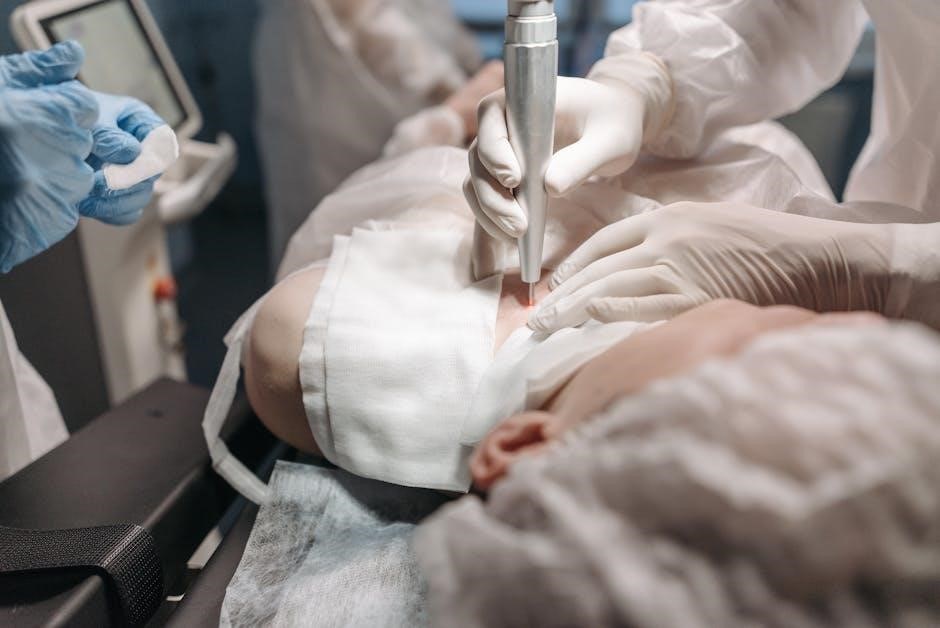
Patient Anxiety and Decision-Making
Cataract surgery evokes anxiety, but informed choices ease fears. Understanding laser versus manual techniques, risks, and recovery empowers patients to confidently decide.
Resources and surgeon consultations are vital for addressing concerns and making the best choice for individual needs and visual goals.
Addressing Common Fears About Cataract Surgery
Many patients understandably experience anxiety surrounding cataract surgery, often stemming from fears of pain, vision loss, or complications. It’s normal to postpone scheduling due to these concerns, but understanding the procedures can alleviate them.
Regarding laser versus manual surgery, fears about laser precision are often unfounded; the technology aims for greater accuracy. Concerns about the laser “burning” the eye are also misplaced, as it uses cool, gentle energy. Manual surgery anxieties often center on surgeon skill, but experienced surgeons achieve excellent outcomes.
Both methods are remarkably safe, with high success rates. Open communication with your surgeon, discussing your specific fears and expectations, is crucial. Knowing the recovery process, potential side effects, and realistic outcomes can significantly reduce anxiety and empower informed decision-making.
Resources for Informed Decision-Making
Choosing between laser and manual cataract surgery requires careful consideration. The American Academy of Ophthalmology (AAO) website offers comprehensive information on both procedures, including potential risks and benefits. ASCRS (American Society of Cataract and Refractive Surgery) provides patient education materials and surgeon finders.
Healio publishes articles and video perspectives from leading ophthalmologists, offering insights into the latest advancements. TIME Health often features articles discussing medical procedures, including cataract surgery, in accessible language. Seeking a second opinion from another surgeon is always advisable.
Discussing your individual needs and lifestyle with your ophthalmologist is paramount. Ask about their experience with both techniques and request data on their patient outcomes. Reputable clinics often provide informational seminars or online resources to aid in your decision.